
Design Thinking Process
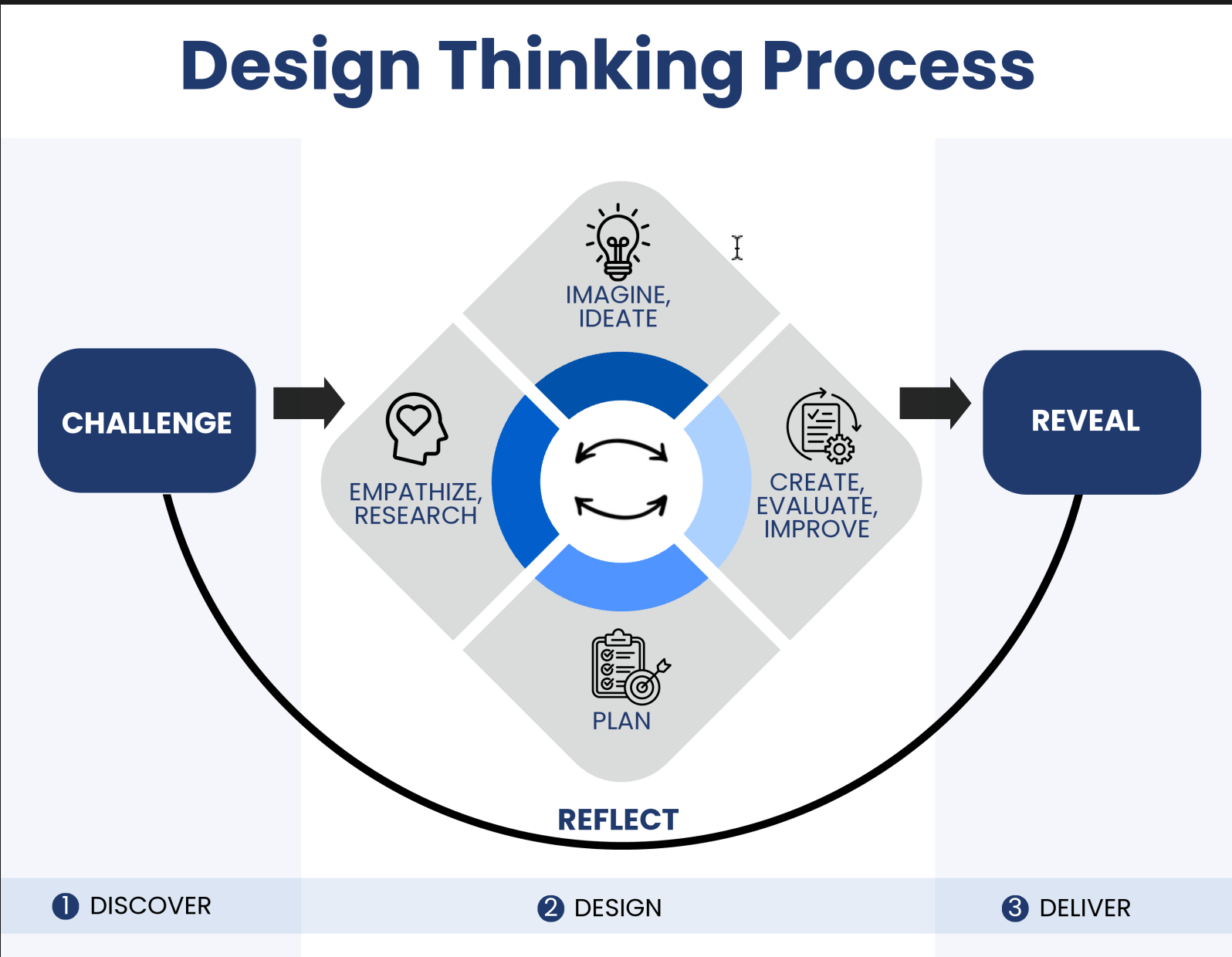
Our students follow a structured, real-world process to take ideas from concept to solution. This approach encourages creativity, problem-solving, and continuous improvement while keeping the focus on real needs and meaningful outcomes.
Discover
Every project begins with a challenge. Students are introduced to a real problem, question, or opportunity that needs a solution.
Design
This is the core of the process, where ideas are explored, tested, and refined.
- Empathize and Research
Students take time to understand the people, needs, and context behind the challenge. - Imagine and Ideate
They brainstorm ideas, think creatively, and explore multiple possible solutions. - Create, Evaluate, and Improve
Ideas are brought to life through prototypes or drafts, then tested and improved through feedback. - Plan
Students organize their approach, define next steps, and prepare for implementation. - Reflect
Throughout the process, students reflect on what they’ve learned and how their ideas can continue to improve.
Deliver
The process concludes with a reveal. Students present their final ideas, solutions, or products to an audience, often including peers, educators, and community partners.
Why It Matters
This process helps students build critical thinking, collaboration, and real-world problem-solving skills. It’s not just about the final product. It’s about learning how to think, adapt, and grow along the way.